In 2016 we were approached by the famous psychologist Yaroslav Samoilov. The task was to generate applications for his free webinar for women “Man: An Honest Instruction”.
From 2016 to 2021, this project grew up and eventually turned into a 6-day free course for women. All this time we’ve been working to promote it. Now for this course, Yaroslav receives from 27 000 to 60 000 applications per month from our team (the amount of flow is regulated by the client himself).
During 5 years of work on the project we have faced many difficulties, but we found solutions, moved on, and continued to give the client results.
We will analyze some of them in this case study.
Difficulties of the project and how we handled them
Difficulty #1. The need for a large number of creatives
A large amount of traffic is required, a large number of creatives – texts and banners.
At the same time, we had to consider the 80/20 rule: with a high probability 20% of all created creatives would work, 80% would not.
Solution to the problem
We calculated how many creatives were needed to invest the budget planned by the client.
To invest $1, we needed to create 0.014 creatives (assuming some creatives would work and some would not).
We multiplied that number by the size of the client’s budget, created the right number of creatives, and found ads that worked because of the high volume of material.
Some of them are still working today.
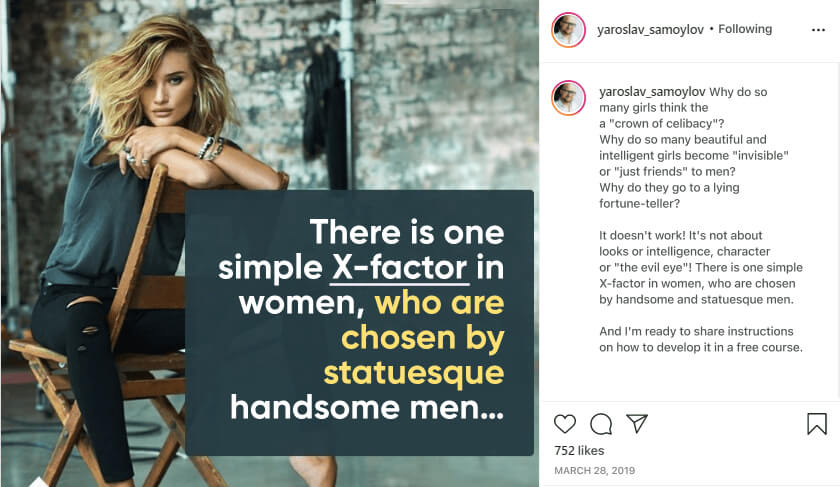
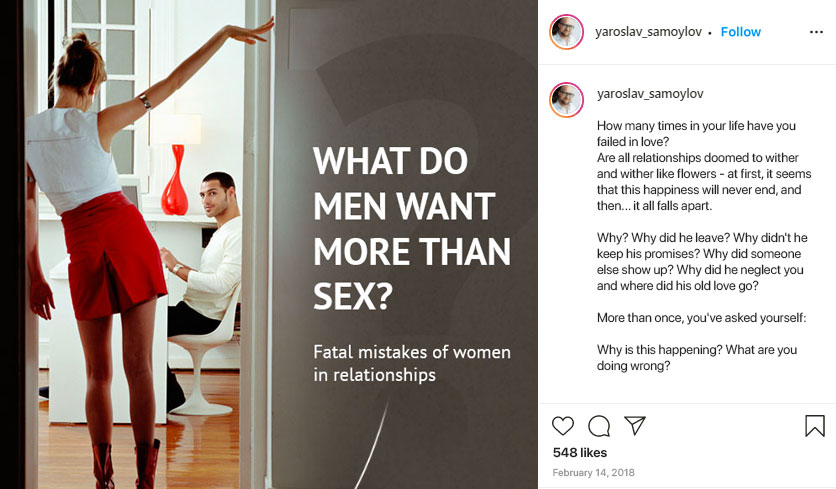
For example, these:
Difficulty #2. Problems with analytics
The problem was that when the results were collected, it took a week to work out whether or not the ad was working.
Waiting a week for results was inefficient – if the ads weren’t working, you had to react quickly and create new ones.
Solution
Together with Yaroslav’s team, we introduced intermediate metrics that were used as a benchmark to analyze the effectiveness of the campaign.
The final cutoff point for the campaign was still set after it was over, but we had benchmarks that allowed us to respond quickly and adjust the ads as needed.
Difficulty #3. Audience burnout.
With so a large amount of traffic, it is impossible to avoid this difficulty.
There are a certain amount of target potential customers. Of course, each year the audience is updated, a new generation grows, but the organic growth of the audience does not outpace the reach that was necessary for the project Yaroslav.
The task was to snag the entire target audience of Yaroslav – women over 18 years old. Some of them needed to be hooked multiple times because some saw the ad and went straight to the course, while others scrolled through the ad without committing to a targeted action.
If an audience that didn’t take a targeted action is shown the same creatives again (even if they worked well), they won’t respond to them. These develop what’s called “banner blindness.”
Solution
We divided the audience into segments according to their interests and ran different creatives for each segment.
When the banners worked for each segment, we re-run them for other audiences. If we saw that a segment had burned out, we let it rest and focused on the others.
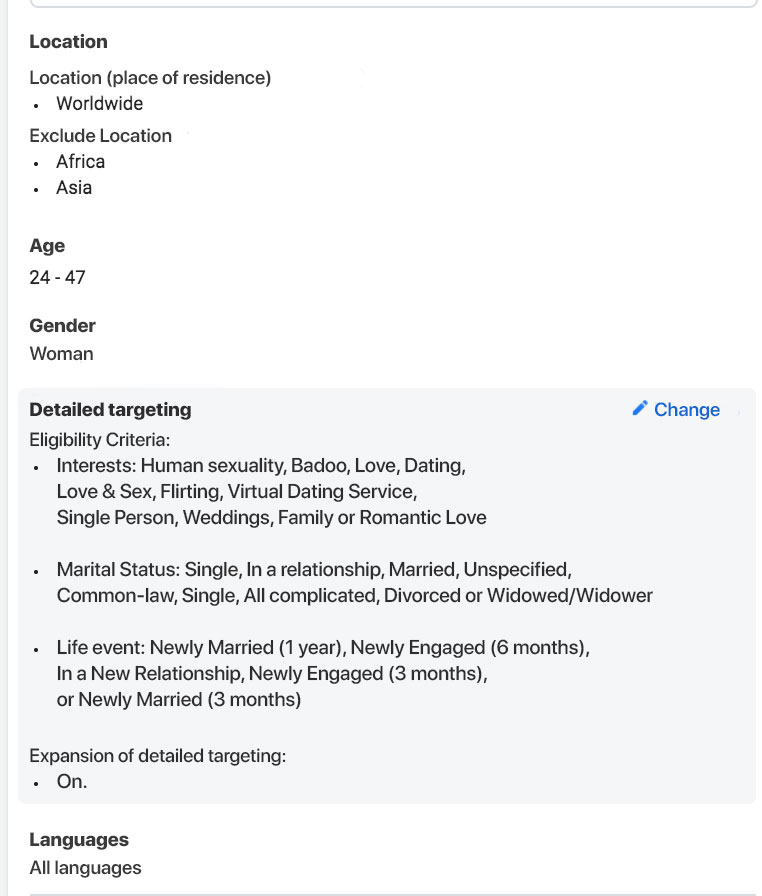
Here’s one example of how we set up audiences for targeting in one of our advertising offices.
Difficulty #4. Blocking ad bureaus and business managers.
Banners and texts that touch the audience’s feelings, cling to the pain, and squeeze the benefits work best.
Such creatives most often violate Facebook’s rules, and the ad bureaus from which they are launched are banned.
Solution
1. Be clear that you have to follow Facebook’s rules. That’s why we redesigned the course landing page and the old scripts. When creating new scripts, we also try to follow the rules
2. We noticed that depending on the advertising account, the cost of a coverage account is different. The goal was to find accounts where the cost would be lower and use them in the launch.
3. Negotiated with Facebook support to review the blocking decision. The goal was to provide us with sufficiently convincing reasons why the decision should be reviewed and the account unblocked.
Through this, we got some people we knew in support to help us submit a request to have the account unblocked. As a consequence, many accounts were returned.
Difficulty #5. Limited marketing techniques
Creating creatives based on benefit, logic, and fear is good and effective, but ads created according to standard templates still burn out one day.
With as much traffic as Yaroslav’s project, it happens even faster. New, unconventional approaches to creative creation were needed.
Solution
Yaroslav’s project was one of the reasons why our company created the Design Bureau, a department of searching and testing new approaches in advertising.
Approaches are the basic principles of creating advertising creatives, on the basis of which you can create numerous advertising variations.
We have accumulated 30+ approaches to the creation of advertising during the department’s work. Periodically we reveal them in our blog articles.
Here are some of them that we used in advertising creatives for Yaroslav:
1. Video ad in the form of a short excerpt from the speaker’s webinar with one key message.
The point of this approach – without additional costs for filming and without the participation of the speaker to create a video ad, which will watch to the end (because it is valuable to the audience) and will take the intended action.
This video looked like this:
Such a banner brought in leads 50% cheaper.
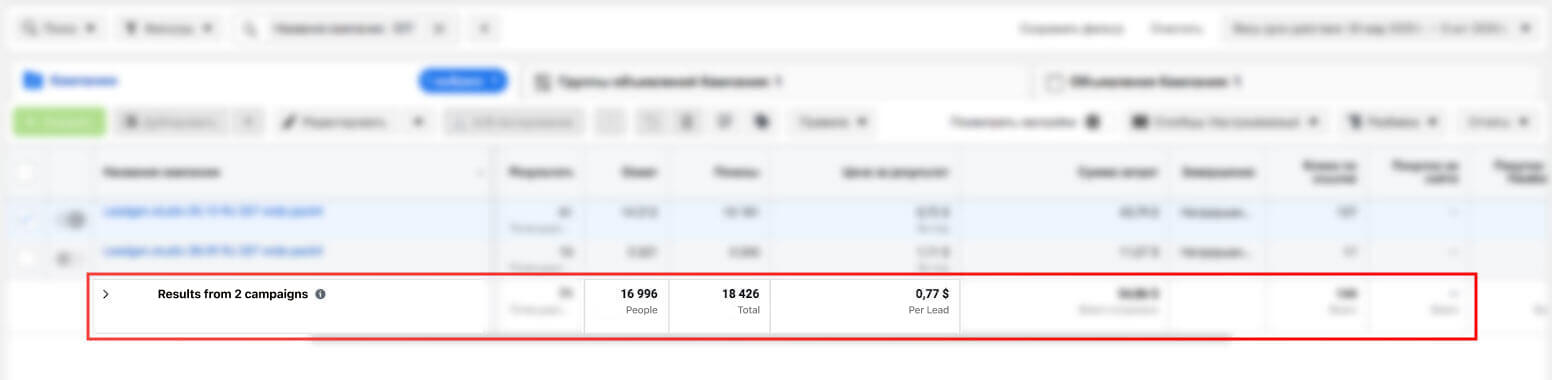
A screenshot from a Facebook advertising account:
2. The “Nostalgia” advertising technique.
The essence of the approach is that we remind the audience of pleasant moments of the past, using banners with images of movies, books, games, objects from their childhood and adolescence.
This evokes pleasant associations and increases the desire to click on the ad.
Here are examples of banners using the “Nostalgia” technique for Yaroslav’s project:
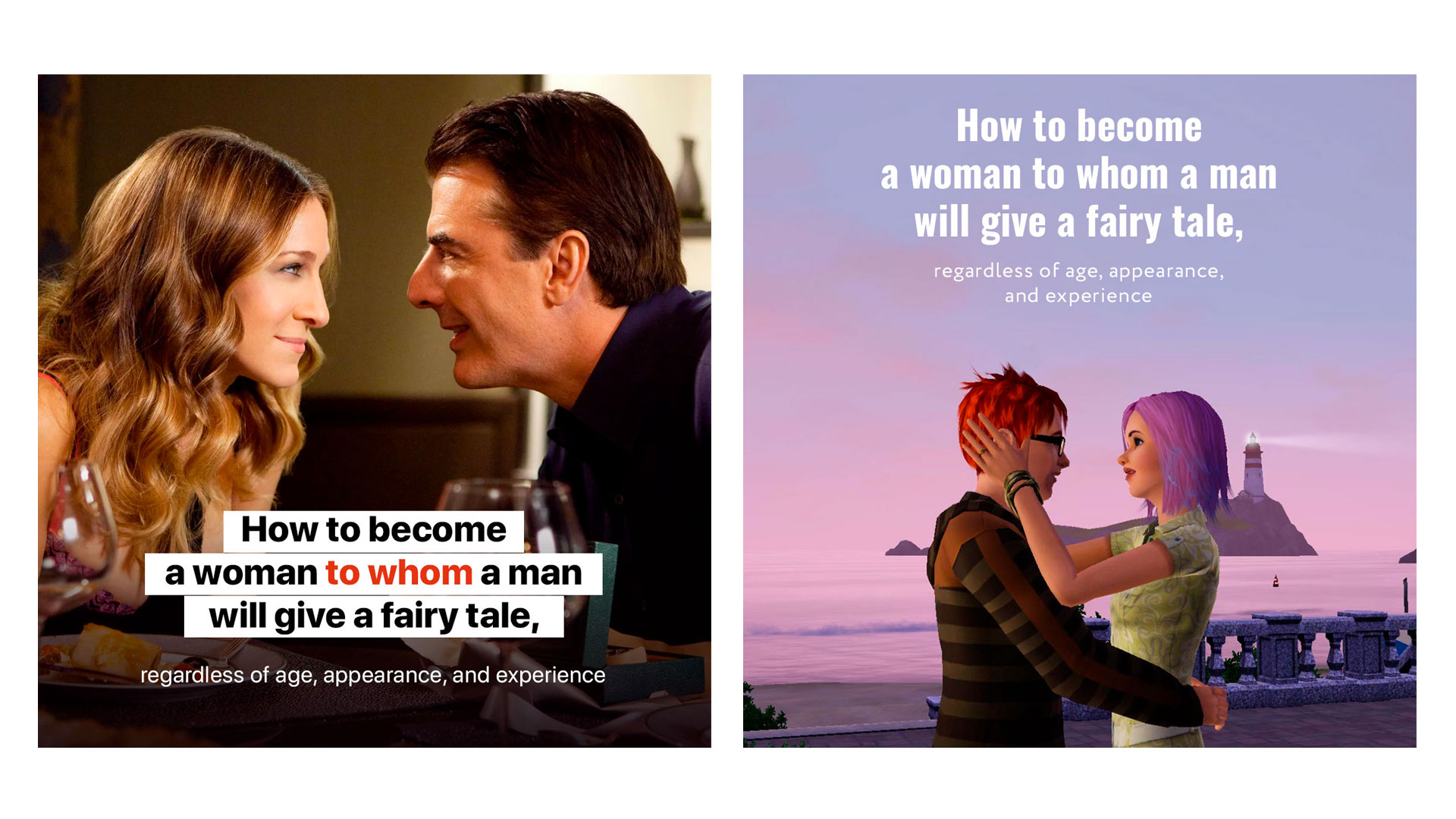
Here we used a familiar to many girls frame from the TV series “Sex and the City” and a fragment from the popular game The Sims.
Such creatives also helped to get bids for the course at half the price. With an average price for a cold audience of 87 rubles, the creatives with nostalgia gave a price per lead of 35-57 rubles. (On average – 46 rubles.).
Result
The client receives 27 000 – 60 000 registrations per month for a free course.
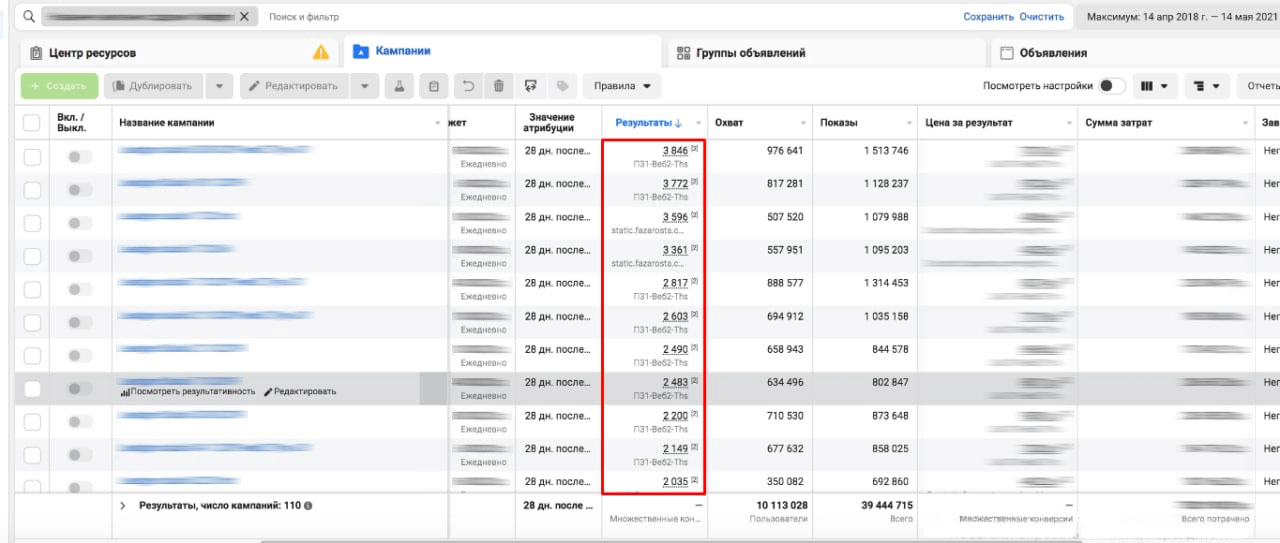
For example, just highlighted in this screen 11 advertising campaigns in a month brought 31,532 applications for the course.


